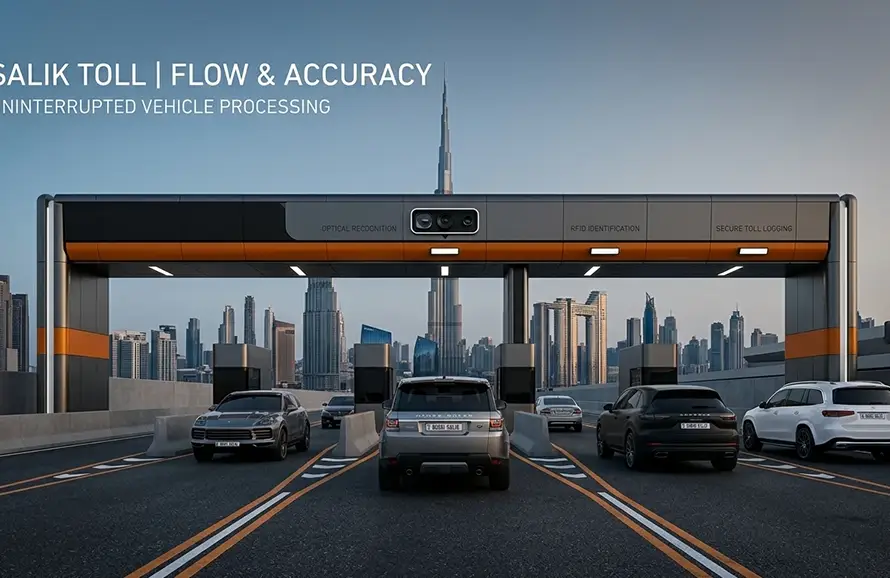

Picture it: you’ve just landed at DXB, the taxi rank moves fast, and the meter starts the moment you slide in. One question matters now — how much is a taxi in Dubai going to cost you?
The honest answer is that Dubai taxi fares follow a published RTA formula, yet the numbers floating around online are all over the place, and plenty of guides still quote rates from two years ago. This guide puts the current 2026 figures in one place: the flagfall, the per-kilometre rate, airport surcharges, tolls, and what real trips across the city cost on the meter. These are the same numbers we double-check at Dubai Rental Cars whenever travellers ask whether a taxi or a rental car fits their trip.
QUICK ANSWER — A taxi in Dubai starts at AED 5 on the meter (AED 5.50 at night) plus roughly AED 2.20–2.45 per kilometre, with a minimum fare of AED 12 for street hails and AED 13 for app bookings. Airport pickups start at AED 20–25. A typical 15-km city ride costs about AED 40; from DXB to Dubai Marina, expect AED 100–115 including tolls.
How Dubai Taxi Fares Are Calculated
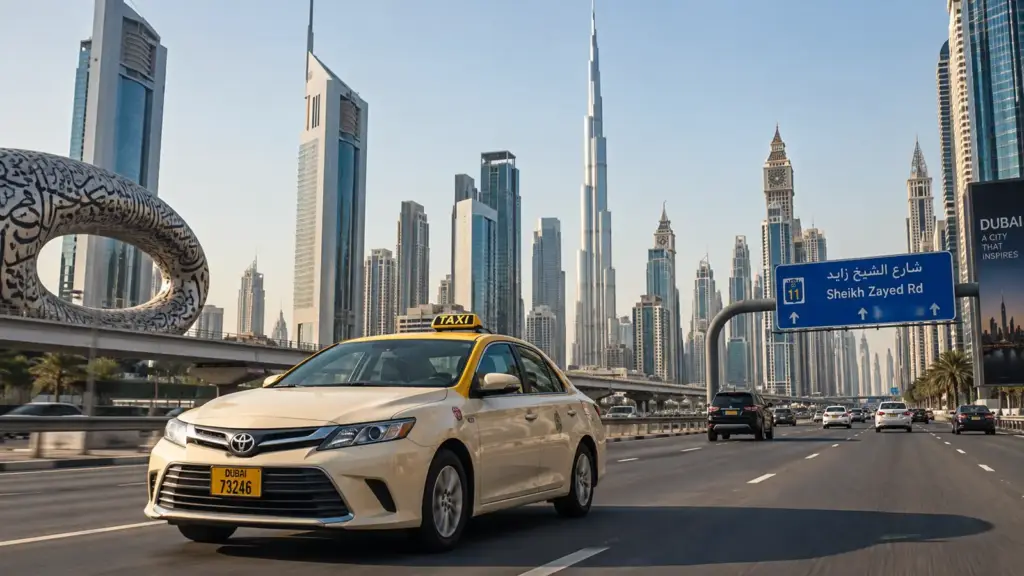
Every taxi in Dubai — cream body, franchise roof colour, pink for the ladies-and-family service — runs on the same RTA-regulated meter. The formula is refreshingly plain: a starting fare when the meter drops, a per-kilometre charge for the distance covered, and 50 fils per minute whenever the wheels stop moving. On top of that sit tolls and a handful of location surcharges, and that is genuinely the whole system.
What catches visitors out is that the starting fare depends on how you get the car and where. Hailing on the street costs AED 5 to start, or AED 5.50 between 10pm and 6am. Booking through an app — Careem’s Hala, S’hail, Bolt or the DTC app — starts at AED 9 in quiet hours, AED 10 late at night and AED 13 at peak times. That spread has been in place since November 2025, when the RTA introduced demand-based booking fees for e-hail rides.
| Charge | Street hail | App booking (e-hail) | Airport / events |
| Starting fare | AED 5 day / AED 5.50 night | AED 9 off-peak / AED 10 night / AED 13 peak | AED 20–25 |
| Per kilometre | AED 2.19–2.45 | AED 2.19–2.45 | AED 2.14–2.45 |
| Minimum fare | AED 12 | AED 13 | metered |
| Waiting time | 50 fils per minute | 50 fils per minute | 50 fils per minute |
Table 1 — Dubai taxi core rates (2026)
Dubai Taxi Fare per KM — and Why the Number Keeps Moving
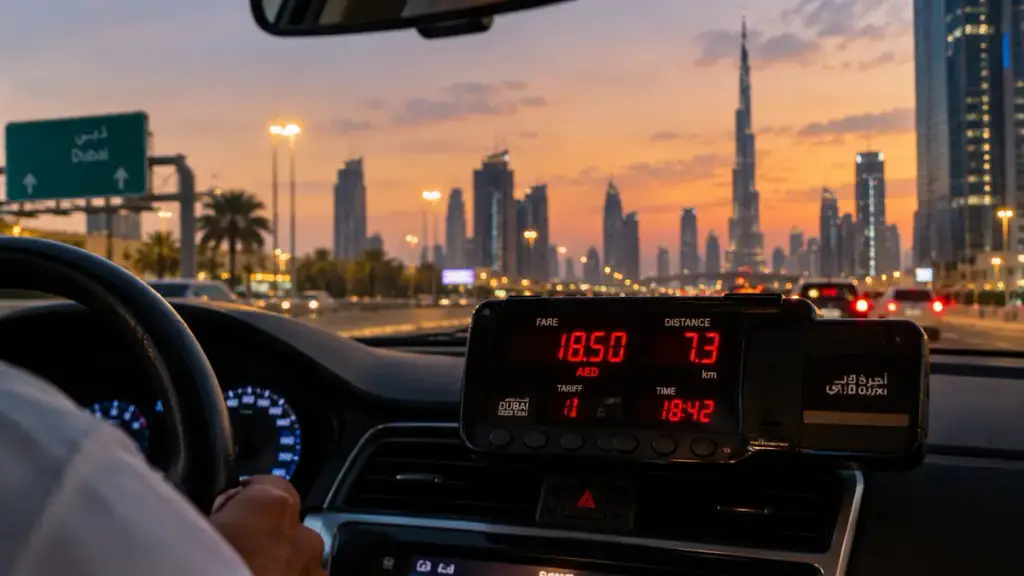
Here is the figure most searches are hunting: taxis in Dubai charge about AED 2.20 per kilometre. The exact number floats. DTC’s site currently lists AED 2.45 for its standard fleet, the family-and-ladies service page shows AED 2.19, and UAE media report a working band of 2.14–2.33 depending on the month. That is not sloppiness — the RTA adjusts the per-km rate against fuel prices, so any article promising one fixed number forever is quietly going stale.
For trip planning, AED 2.20 is the safest working figure. Across a 10-km ride, the gap between 2.19 and 2.45 amounts to roughly AED 2.60 — annoying, not trip-ruining. Long rides are where it bites: a taxi from Dubai to Abu Dhabi covers about 140 km, so every fils of movement in the rate shifts the final fare by AED 14, which is why intercity trips deserve their own maths.
Taxi Fare for 10, 20, 30 and 40 KM in Dubai
People search exact distances constantly — “taxi fare for 20 km in Dubai” alone shows up in search data month after month — so here is the straight arithmetic: AED 5 flagfall, AED 2.20 per km, no tolls. Treat these as baselines, then add Salik gates if your route crosses them and waiting time if you will ride through heavy traffic.
| Distance | Street-hail fare (approx.) | App booking, off-peak |
| 5 km | AED 16 | AED 20 |
| 10 km | AED 27 | AED 31 |
| 15 km | AED 38 | AED 42 |
| 20 km | AED 49 | AED 53 |
| 25 km | AED 60 | AED 64 |
| 30 km | AED 71 | AED 75 |
| 40 km | AED 93 | AED 97 |
Table 2 — Estimated Dubai taxi fare by distance (2026)
Two caveats keep this table honest. Minimums apply first — a 2-km hop still bills at AED 12 on the street, not AED 9.40. And tolls sit outside the meter arithmetic: each Salik gate adds AED 4 off-peak or AED 6 at peak times, and a 20-km cross-city route can cross two or three gates, tacking on AED 8–18 before you notice.
What Popular Routes Actually Cost
Distance is one thing; Dubai traffic is another. The brackets below blend the current tariff with recent trip reports for the routes travellers actually ride — airport runs, mall-to-hotel hops and the Marina commute.
| Route | Approx. distance | Typical fare |
| DXB → Deira / Bur Dubai | 10 km | AED 45–55 |
| DXB → Downtown / Dubai Mall | 14 km | AED 60–70 |
| DXB → Business Bay | 17 km | AED 65–75 |
| DXB → Dubai Marina / JBR | 33 km | AED 100–115 |
| Dubai Mall → Dubai Marina | 17 km | AED 50–60 |
| Dubai Mall → Atlantis (Palm Jumeirah) | 20 km | AED 55–65 |
| Dubai → Sharjah | 25 km | AED 80–95 incl. AED 20 cross-border fee |
Table 3 — Typical metered fares on popular Dubai routes
Dubai Airport Taxi Fares: What’s Different at DXB
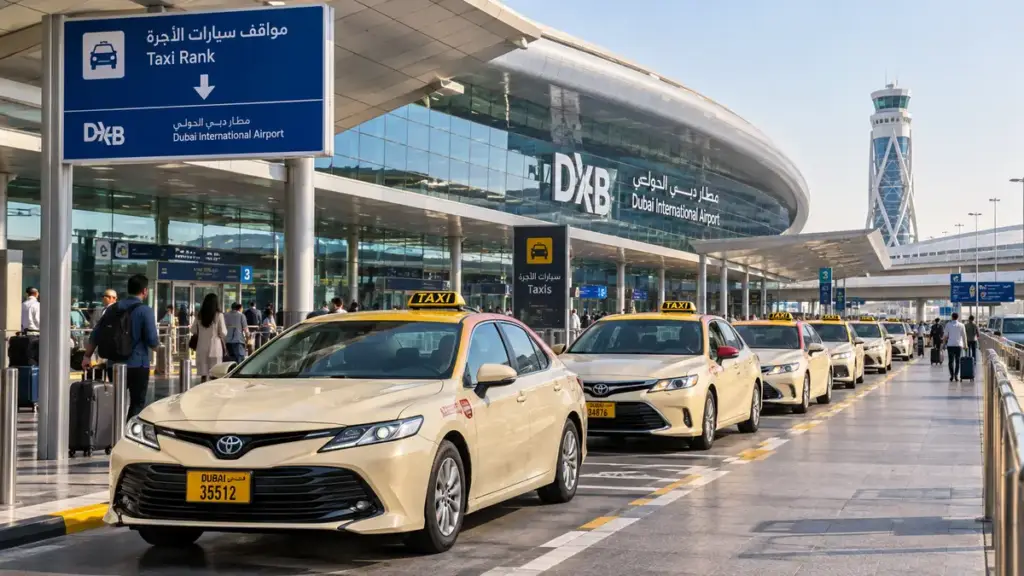
Taxis leaving Dubai International Airport don’t use the street AED 5 flagfall. RTA’s published table puts the starting fare at AED 20 for a regular car and AED 25 for a van, while Dubai Airports’ own guidance and most trip reports quote AED 25 at the DXB terminal ranks. Whichever figure your meter shows, the per-km rate after it matches the city tariff — an airport ride is a normal fare with a higher entry point, not a separate pricing universe.
The ranks run around the clock at every terminal and the queue moves quickly; ten minutes of waiting is a bad night. One detail worth knowing: trips booked to the airport are ordinary street fares, so the surcharge only bites departures from the terminal. If you’re flying out of Al Maktoum (DWC), the same airport structure applies, and DTC has run promotional flagfall discounts there before.
Event and Exclusive-Location Surcharges
A quieter rule catches visitors out. At major event venues — Expo City, Global Village, the World Trade Centre during big exhibitions — starting fares can rise to AED 20–25 when demand spikes, and New Year’s Eve hotspots carry their own peak pricing. Leaving a mega-event at midnight is exactly when app estimates and rank meters diverge most, so checking both before committing to a queue has become standard practice among residents.
Peak Hours, Night Rates and the New Dynamic Pricing
Since November 2025, when you book matters nearly as much as where. RTA now defines peak windows — Monday to Thursday 8–10am and 4–8pm, Friday 8–10am and 4pm–midnight, weekends 4pm–midnight — where app booking fees hit their AED 7.50 ceiling. Midday and the 10pm–6am stretch cost less on the booking layer, though street-hail trips after 10pm carry the slightly higher AED 5.50 flagfall.
Local reaction has been blunt. Reddit threads from early 2026 describe regular short trips jumping from around AED 35 to AED 120 during surge windows, and commuters report 50% premiums on Hala rides to work. Those are extremes rather than the rule, but they explain a new habit among residents: check two apps plus the street before committing anywhere near rush hour.
Extra Charges That Catch Visitors Out
The meter rarely tells the whole story on cross-city trips. Several add-ons are published tariff rather than scams, but they change the final slip:
- Salik tolls — AED 4 per gate off-peak, AED 6 in the 6–10am and 4–8pm peaks, free from 1am to 6am
- Sharjah crossing — a flat AED 20 added to any trip entering Sharjah
- Van and family pickups from airports — AED 25 starting fare instead of AED 20
- Event venues (Expo City, Global Village, DWTC) — starting fares of AED 20–25 during major events
- Waiting time — 50 fils per minute whenever the car is stationary in traffic
Salik Tolls: Peak vs Off-Peak
Salik itself moved to dynamic pricing in early 2025, so a route crossing two gates at 5pm costs AED 12 in tolls, the same route at 2pm costs AED 8, and after 1am it costs nothing. Across a week of sightseeing that compounds — it is the reason locals schedule mall runs for late morning rather than sunset.
Taxi vs Uber vs Careem vs Hala: Which Is Cheaper?
Dubai’s app market has more layers than most cities, and the pricing logic differs under each. Hala — the official taxi-booking option inside the Careem app — runs on the same RTA meter as street taxis plus the time-based booking fee, which makes it the fairest app choice: no surge multiplier, ever. Regular Careem and Uber rides use private cars with their own tariffs, typically 10–30% above the meter for comparable trips, with surge stacked on top in busy windows. Bolt and Yango compete harder and can undercut the meter on quiet days.
| Service | What it is | Starting point | Cost verdict |
| Street taxi (DTC + franchises) | Metered taxi | AED 5 / 5.50 flagfall | Cheapest overall |
| Hala (in Careem) | Metered taxi + booking fee | AED 9–13 | Cheapest app option |
| Bolt / Yango | Private, RTA-licensed | Varies | Often cheapest off-peak |
| Careem (private cars) | Private ride-hailing | Varies | Usually above the meter |
| Uber | Private, premium-leaning fleet | Varies | Usually the priciest |
Table 4 — Taxi and ride-hailing options in Dubai compared

A rule of thumb that still survives dynamic pricing: for airport pickups and hotel-adjacent rides, the rank taxi wins. For late-night or event-area pickups where taxis are scarce, compare Hala against Bolt before booking. Treat Uber as the comfort choice, not the budget one. If you’re weighing up which online taxi service in Dubai is best for your trip, the honest answer is that most residents keep two apps installed precisely because the winner changes by the hour.
Paying for Your Ride: Cash, Cards and Nol
Every Dubai taxi takes cash, and nearly all take cards. The RTA payment list covers credit and debit cards, Apple Pay, Samsung Pay, Alipay, QR payments and Nol, with app bookings also charging to Careem Pay or in-app wallets. Card acceptance became standard years ago, which makes the occasional “machine not working” line from a driver more suspicious than credible — though keeping AED 50–100 in cash is still sensible for short late-night rides. Receipts are available on request and print from the meter, which matters more than you’d think for expense claims and lost-property follow-ups.
Nol deserves a special mention because it surprises people pleasantly: the same card used for the Metro, tram, buses and ferries taps straight onto the taxi payment screen. One card, one top-up, almost the entire public-transport system. Foreign cards work fine too, though a small currency-conversion fee from your bank may apply.
Do You Tip Taxi Drivers in Dubai?
Tipping isn’t expected the way it is in New York or London, and drivers rarely ask. The local habit is rounding up: AED 43 becomes 45, AED 78 becomes 80. For genuinely good service — luggage hauled, a calm hand through Friday-night traffic — 10% is generous rather than obligatory. Round numbers also keep cash handovers quick, which drivers appreciate.
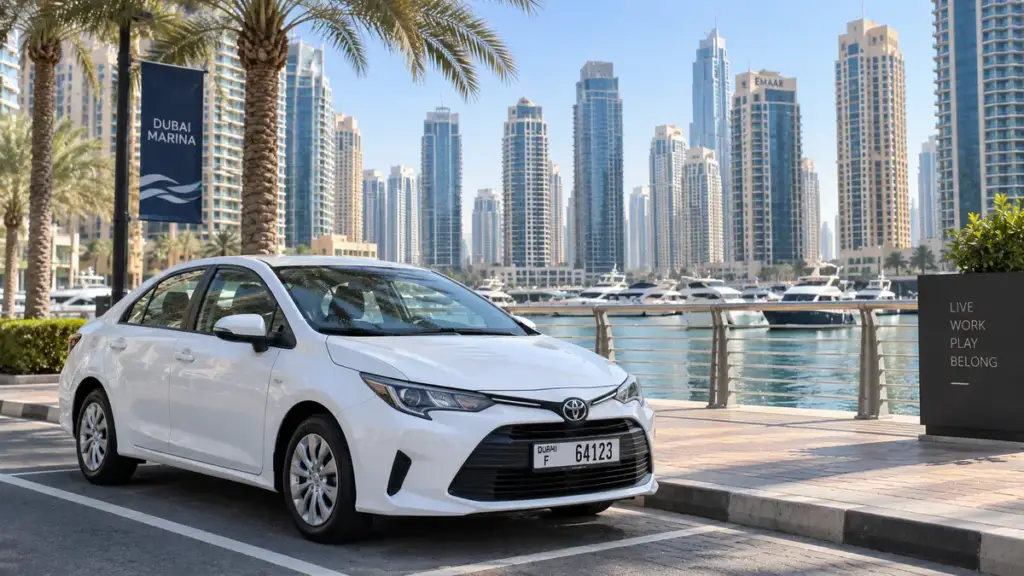
When a Rental Car Beats Taking Taxis
The maths turns blunt for anyone moving around a lot. Six taxi rides a day — a realistic pace for sightseeing with kids, or meetings strung across Deira, Downtown and the Marina — lands at AED 150–250 per day. Economy rentals in Dubai start from roughly AED 70–120 daily, and the fuel for a typical tourist day of driving rarely clears AED 30. Somewhere between day two and day three of that rhythm, the meter stops making sense.
There is friction to weigh too: child seats that taxi fleets don’t guarantee, luggage space on shopping days, and the freedom to reach Hatta, Abu Dhabi or the desert edge without watching a meter climb for an hour. Dubai’s road network makes driving easy — wide, well-signed in English, GPS-friendly. If the comparison is relevant to your dates, you can browse current rates on our economy car rental page and run the numbers against your own itinerary.
The maths turns blunt for anyone moving around a lot. Six taxi rides a day — a realistic pace for sightseeing with kids, or meetings strung across Deira, Downtown and the Marina — lands at AED 150–250 per day. Economy rentals in Dubai start from roughly AED 70–120 daily, and the fuel for a typical tourist day of driving rarely clears AED 30. Somewhere between day two and day three of that rhythm, the meter stops making sense.
There is friction to weigh too: child seats that taxi fleets don’t guarantee, luggage space on shopping days, and the freedom to reach Hatta, Abu Dhabi or the desert edge without watching a meter climb for an hour. Dubai’s road network makes driving easy — wide, well-signed in English, GPS-friendly. If the comparison is relevant to your dates, you can browse current rates on our economy car rental page and run the numbers against your own itinerary.
FAQ about Taxi price in dubai/UAE
Compared with London or New York, no — around AED 2.20 per km undercuts most Western capitals. Compared with the Metro, which charges AED 3–7.50 per ride, it is the premium option. Most visitors use taxis for airport runs and late nights, and the Metro for daytime hops. The catch is timing: app bookings during peak windows can add 30–50% to what the same ride costs at noon.
AED 12 when you hail on the street, AED 13 when you book through an app. Rides shorter than about 3 km bill at the minimum rather than the per-km arithmetic.
Roughly AED 45–55 to Deira, AED 60–70 to Downtown or Dubai Mall, and AED 100–115 to Dubai Marina, tolls included. Late-night trips run slightly higher on the night flagfall.
Yes. Cards, Apple Pay, Samsung Pay, Alipay, QR payments, Nol and cash are all accepted. Terminals occasionally fail, so carrying some cash is wise.
Slightly. The street-hail flagfall rises from AED 5 to AED 5.50 between 10pm and 6am, and late-night app bookings start at AED 10 instead of AED 9. The per-km rate does not change.
Usually not. Uber generally prices above the taxi meter in Dubai, and surge widens the gap at busy times. Hala, Careem’s official taxi option, is the budget-friendly app choice.
Five to six rides typically add up to AED 150–250. At that pace a daily economy car rental — roughly AED 70–120 plus fuel — usually wins, which is why the comparison above matters. For a two-ride day, taxis stay comfortably ahead and there’s nothing to think about.
It isn’t required. Rounding up to the nearest AED 5 or 10 is the local norm; 10% marks genuinely good service.
Sources — verified September 2026
• RTA — Taxi Fares in Dubai (rta.ae, page updated 23 June 2026)
• Dubai Taxi Company (DTC) — Taxi Service Fees (dubaitaxi.ae)
• Gulf News — RTA revises Dubai taxi fares: what’s changing for app users (6 November 2025)
• Khaleej Times — Dubai taxi fare changes: peak-hour rates for weekdays (5 November 2025)
• Dubai Airports — Taxi ranks, fares and ride-hailing at DXB (dubaiairports.ae)
• Salik variable toll rates via ezhire.ae — New Salik Toll Rates in Dubai 2026
• r/dubai community threads on dynamic pricing (December 2025 – February 2026)
• Propertyfinder.ae — Guide to RTA Dubai Taxi Fares (January 2026), cross-checked for discrepancies