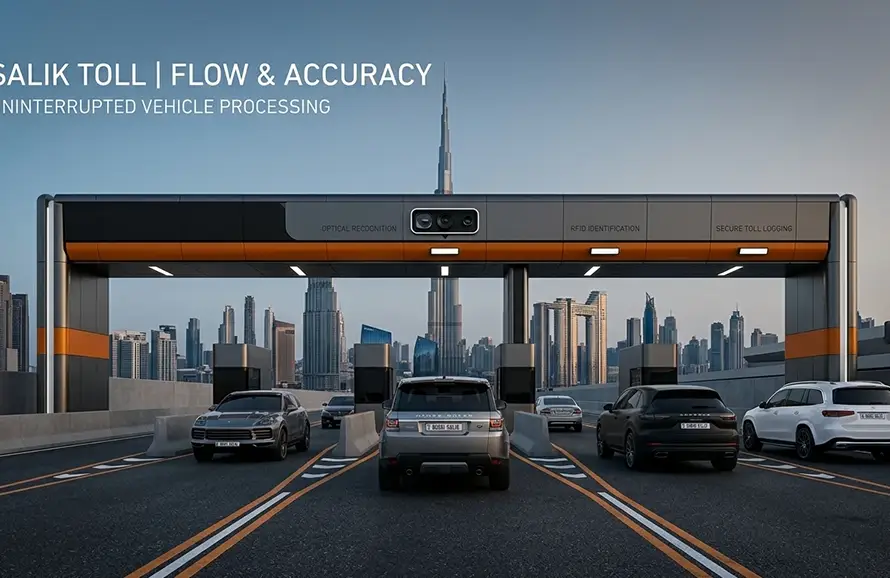


Renting a vehicle in Dubai is one of the fastest ways to explore the city’s skyline, beaches, and desert — but Salik tolls can quietly turn a budget trip into an expensive one. Many first-time visitors are surprised when the final invoice includes charges they never saw at the gate, because Dubai’s toll system is fully electronic and silent. Understanding Salik for Rental Cars before you pick up the keys is essential to avoid disputes, hidden admin fees, and deposit deductions. If you are considering Dubai car rental for your trip, this guide explains who pays, how charges are calculated, when billing happens, and how to control costs.
Quick Answer
| Question | Quick Answer |
|---|---|
| Who pays Salik on a rental car? | The renter pays; the rental company collects from you via deposit or card on file. |
| Does every rental car have a Salik tag? | Yes — virtually all licensed rental cars come pre-fitted with an active tag. |
| Is Salik included in the rental price? | No. Tolls are charged separately based on actual gate crossings. |
| What is the administrative fee? | Often AED 2–5 per crossing or a flat AED 15–25/day; varies by company. |
| When do you pay? | Usually at return or on the final invoice; some charges post weeks or months later. |
| Can tourists pay Salik directly? | Generally no — the tag is tied to the vehicle’s fleet account, not the driver. |
Table of Contents
What Is Salik for Rental Cars?
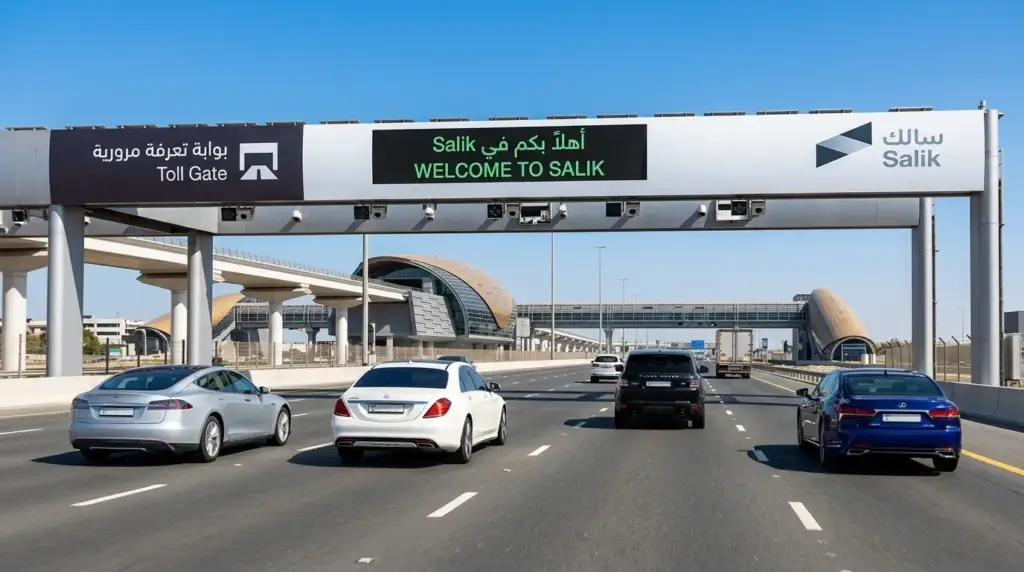
Salik, meaning “clear and moving” in Arabic, is Dubai’s electronic toll system operated by Salik Company PJSC under the RTA. Launched in 2007, the network now spans ten toll gates across Sheikh Zayed Road, Al Ittihad Road, and the main creek crossings. It uses RFID tags and automatic number plate recognition, so vehicles are charged automatically each time they pass under a gate — no booths, no barriers, no cash. Want the full background? See our complete guide to Salik tolls in Dubai.
For drivers using rental vehicles, Salik for Rental Cars refers to the way these automatic toll charges are passed through from the vehicle’s account to the person who drove the car. The tag is registered to the rental company’s fleet account, so every crossing is recorded centrally and reconciled against each rental agreement. Since January 31, 2025, Salik uses variable pricing, making the salik toll rental car workflow critical for budgeting.
Do Rental Cars Come With a Salik Tag?
Yes. When you Rent a car in Dubai, the vehicle comes with a working Salik tag. The tag is linked to the rental company’s master account, not the individual driver, so tolls are not deducted from your personal card at the gate. This separation is the core of the salik rental car model: the company owns the tag, the system charges the company, and the company bills the driver.
If a tag is missing or faulty, the rental company must resolve it with RTA — but confirm the tag is present at pickup, since driving a tag-less vehicle through a gate can trigger a fine. The salik toll rental car system is designed so responsibility always flows back to the driver.
Can You Rent a Car Without Salik?
You can rent a car without using Salik, but you cannot rent a registered vehicle without a Salik tag — the tag is always present, but you only pay when you cross a gate. Many drivers use the toll-free window (1:00 AM–6:00 AM) or parallel roads like E311 and Emirates Road to avoid charges entirely. So while the does rental car come with salik tag question always answers “yes,” you can opt out of paying tolls by choosing alternative routes.

Who Pays Salik on a Rental Car?
The short answer: the renter pays, the rental company collects. Every rental agreement in Dubai includes a clause stating that the driver is responsible for all tolls incurred during the rental period, along with any related service fees. This is the foundational principle behind Who Pays Salik for Rental Cars in Dubai — the legal and financial responsibility sits with the person who drove the car, even though the technical payment flows through the company’s account.
When you sign the contract, you authorise the company to deduct Salik charges and fines from your deposit or charge them to your card. Some firms provide an itemised toll statement at return; others send an invoice days or weeks later when RTA releases the crossing data. This consistency is what makes Salik for Rental Cars predictable despite company differences.
How Are Salik Charges Calculated?
The salik toll rental car calculation has two layers: the official RTA tariff (fixed for every vehicle) and the rental company’s service charge (varies by provider). Understanding both is essential for any customer who wants to forecast the true cost of a trip.
Official Salik Fee
Since the variable pricing model launched on January 31, 2025, the official per-crossing fees are:
| Period | Charge per Crossing |
|---|---|
| Peak hours (weekdays 6–10 AM, 4–8 PM) | AED 6 |
| Off-peak (weekdays 10 AM–4 PM, 8 PM–1 AM) | AED 4 |
| Sundays (excluding public holidays) | AED 4 flat |
| Toll-free window (daily 1–6 AM) | AED 0 |
A 5% VAT applies on top of the toll tariff, and the same gate is charged only once per hour per direction to prevent double-charging. There is no daily cap — every gate crossing in a chargeable window is billed, which is why Salik for Rental Cars costs can climb quickly for daily commuters.
💰 Want to Reduce Your Salik Costs?
Learn the Free Salik Timing in Dubai, peak-hour charges, and the best times to drive if you want to reduce toll costs on your rental car.
Free Salik Timing in Dubai →Administrative & Service Fees
This is where rental companies differ. The rental car salik payment structure typically takes one of three forms:
| Billing Model | Typical Cost | When It’s Best |
| Per-crossing admin fee | AED 2–5 per toll, added to the official fee | Light users, weekend drivers |
| Flat daily Salik package | AED 15–25 per day regardless of crossings | Commuters crossing multiple gates |
| Pure pass-through (rare) | Only the official RTA fee, no markup | Premium or long-term rentals |
The markup covers reconciling RTA data, handling statements, and managing disputes — but it can add 50% or more to the face value of the toll, which is why it matters so much for salik rental car budgeting. Some companies do not clearly disclose which model applies, so ask explicitly at the counter.
Is Salik Included in the Rental Price?
No. Across the Dubai market, Salik tolls are treated as a separate, usage-based charge, not as part of the daily or weekly rental rate. Even “all-inclusive” promotional rates typically exclude Salik, fuel, parking, and traffic fines, because these costs depend entirely on driver behaviour. Some companies offer optional “Salik-included” upgrades for a flat daily surcharge, worthwhile if you plan to cross several gates per day. But the default assumption should always be that tolls are billed separately — confirm this in writing to avoid disputes. This rule applies to salik rental car agreements of every length.
When Do You Pay Salik Charges?
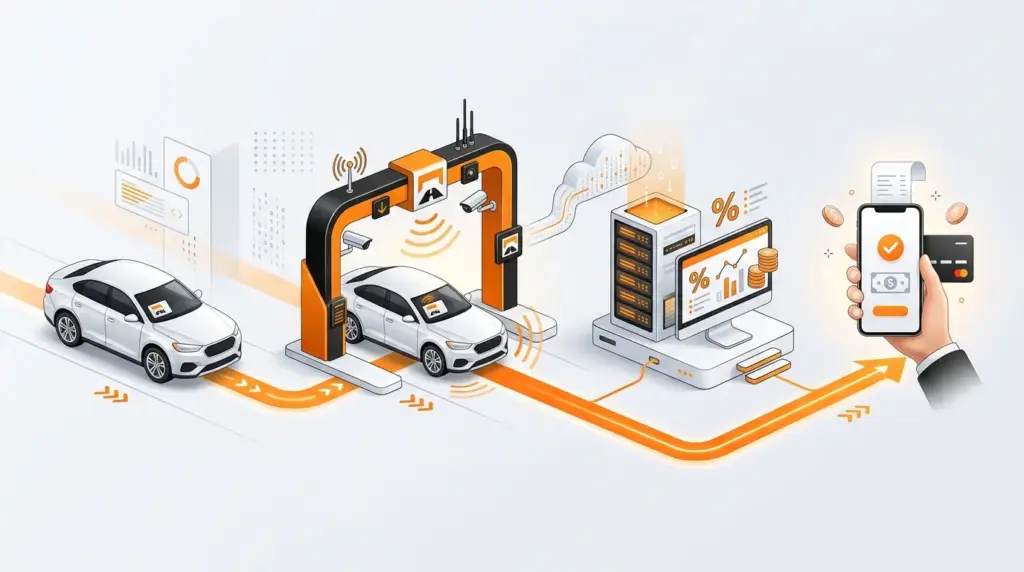
Timing is a commonly misunderstood part of the salik toll rental car experience. RTA does not always push crossing data to fleet operators in real time; records can take hours to weeks to appear. You may face three billing scenarios:
- At return — if crossings have posted, charges appear on your final invoice and are deducted from your deposit or card.
- Within 7–30 days — most crossings clear within a month, so renters receive a second invoice after leaving Dubai.
- Two to three months later — late-posting crossings are common, and contracts authorise the company to charge your card on file after the rental ends.
This delayed-billing reality is why how to pay salik on rental car is not always a one-step process. Keep your card on file active and request a breakdown in writing if charges arrive weeks later.
Can Tourists Pay Salik Directly?
In practice, no. The Salik tag is registered to the rental company’s fleet account, and RTA ties every crossing to that account — not the driver. Tourists cannot “claim” charges from a separate portal, because the toll was already deducted from the company’s balance at the moment of crossing. This is a structural feature of the salik toll rental car system. You can, however, request an itemised statement showing the date, time, gate, and amount of each crossing to verify you are not overcharged.

How Can You Check Your Salik Charges?
You cannot check a rental car’s Salik balance directly through RTA, because the account belongs to the rental company. However, you can verify the charges through three reliable channels:
- Request the rental company’s Salik statement — most providers email a PDF showing every gate crossing tied to your rental agreement.
- Use the official Salik app or RTA portal to confirm the per-crossing rate matches the 2025 variable pricing.
- Keep your own route log — a note of where you drove each day makes it easy to spot discrepancies.
Reviewing charges proactively is a core part of managing Salik for Rental Cars responsibly, and it dramatically reduces the chance of paying for crossings you never made. The salik toll rental car audit trail is always available — you just have to ask for it.
Tips to Avoid Unexpected Salik Charges for Rental Cars
A few practical habits can keep your salik toll rental car costs predictable and disputes to a minimum:
- Ask the counter about the billing model — per-crossing, flat daily, or pass-through? Get it in writing.
- Use toll-free windows — travel between 1:00 AM and 6:00 AM is free, and Sundays carry a flat AED 4 rate.
- Plan alternative routes — E311 and Emirates Road bypass most gates.
- Keep a daily driving log — note the gates you cross to verify the final statement.
- Avoid peak hours — peak crossings cost AED 6 versus AED 4 off-peak, a 50% difference.
- Keep your card active after return — late Salik invoices can hit two to three months later.
- Photograph the dashboard at pickup and return — if your rental has a Salik indicator, capture it.
Following these steps keeps Salik for Rental Cars from becoming the most expensive part of your trip, and they apply to every salik rental car agreement regardless of provider.

Why Do Some Rental Companies Charge More Than the Official Salik Fee?
The gap between the official RTA tariff and your invoice comes from administrative and service fees, which are legitimate but vary widely. Rental companies must reconcile RTA data, allocate charges to each rental agreement, issue statements, manage disputes, and absorb late-posting crossings — the markup covers this workload. Budget-friendly local firms often add AED 2–5 per crossing, while premium or airport-based operators apply a flat AED 20–25 daily fee. A few specialist providers pass tolls through at cost. The variation is why the who pays tolls in rental cars question is not just “who” but “how much extra” — read the Salik clause in your contract before signing.
What Happens If Your Security Deposit Has Already Been Released?
This is one of the most stressful scenarios for renters. Many companies refund the security deposit within 24 hours to 30 days of return — but Salik crossings can post even later. If your deposit has already been released and a toll charge appears afterward, the rental company will charge the card you left on file, using the authorisation clause in your contract. This is legal and standard practice across Dubai. To protect yourself: keep that card active for at least three months, retain your final invoice, and request the RTA-linked statement showing the exact gate, date, and time before paying any vague “outstanding Salik” notice. This is also the right approach for any salik rental car dispute, and it explains why the salik toll rental car billing cycle can outlast the rental itself.
FAQs about Salik for Rental Car
Yes. Use parallel roads like E311 and Emirates Road, or travel during the toll-free window (1:00 AM–6:00 AM). Sundays carry a flat AED 4 rate, lower than weekday peaks.
Unpaid charges accumulate on the vehicle’s account, and the rental company deducts them from your deposit or card on file. Persistent non-payment can lead to fines or registration holds.
Yes, and this is common. RTA crossing data can post weeks or months late, so contracts authorise companies to charge your card on file after the rental closes. Keep your card active for at least three months.
Technically no, because the tag is tied to the fleet account, not an individual. You can reimburse the rental company using any card, and some firms accept third-party payment links for outstanding balances.
The renter always pays. The rental company collects the official RTA tariff plus any admin fee, from your deposit, card on file, or a follow-up invoice. The company never absorbs the cost.
Usually after. Most charges appear on your final invoice at return or within 30 days, because RTA does not push crossing data in real time. Some crossings post two to three months later.
The renter always pays. The rental company collects the official RTA tariff plus any admin fee, from your deposit, card on file, or a follow-up invoice. The company never absorbs the cost.